

Introduction
Big game fishing puts far more pressure on a trolling rod than typical inshore or freshwater fishing. Large fish can make powerful runs, change direction quickly, and place heavy loads on the rod throughout the fight. Offshore conditions can add even more stress. Strong currents, deep water, heavy lures, and high drag pressure all require a reliable setup.
Species such as tuna, marlin, sailfish, shark, and mahi-mahi can test every part of your tackle. A good trolling rod for big game fishing needs enough strength to handle these fish, but strength alone does not make a rod a good choice. The rod must also provide the right balance of power, flexibility, leverage, and control.
When choosing a big game trolling rod, consider several key specifications. Rod power determines how much force the blank can handle and how much lifting power it provides. Line class helps you match the rod to your main line and drag setting. Action affects how the rod loads, absorbs sudden runs, and transfers pressure to the fish. Length influences leverage, line control, and overall handling. You should also check the recommended lure weight, guide system, and butt style. Finally, construction and durability matter when you fish in demanding saltwater environments.
The right choice depends on more than a single specification. Your target species, fish size, fishing technique, line, reel, lure, water depth, current, and overall fishing conditions should all influence your decision. Instead of simply choosing the strongest or heaviest rod, look for a balanced setup that gives you enough power while maintaining control and fish-fighting performance.
What Is a Big Game Trolling Rod?
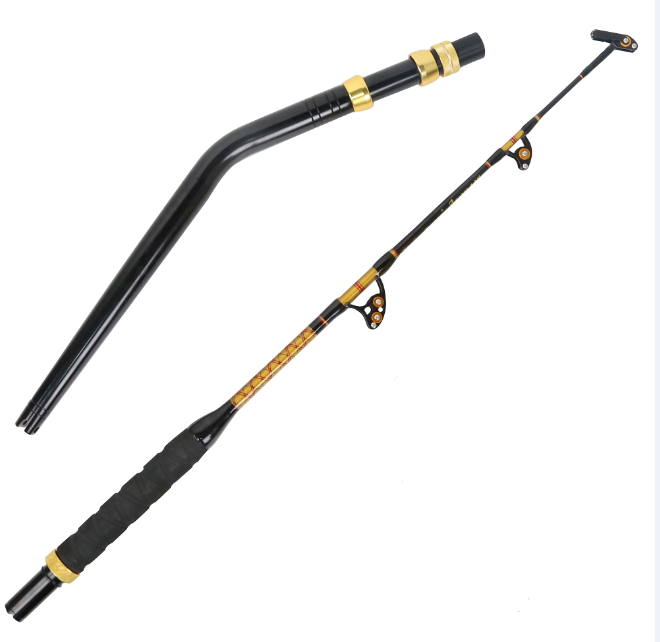
A big game trolling rod is designed to handle the heavy loads that come with offshore fishing for large, powerful fish. It combines a strong blank, high line rating, reliable guides, and a durable reel seat to provide the power and control needed during long fights. Compared with a standard trolling rod, a big game model focuses more on lifting strength, durability, and performance under sustained pressure.
How a Big Game Trolling Rod Differs From a Standard Trolling Rod
The main difference is the amount of load the rod can handle. A standard trolling rod may work well for smaller offshore species, but a big game rod needs to perform when a large fish makes a fast run or changes direction.
Key differences include:
- Heavier construction: Big game rods use stronger blanks and reinforced components to handle high loads.
- Higher line ratings: They support heavier line classes for targeting larger fish and applying greater drag pressure.
- Greater lifting power: A strong backbone helps anglers gain line and control powerful fish near the boat.
- Stronger guides and reel seats: Heavy-duty guides and secure reel seats help withstand repeated pressure from heavy tackle.
- Better saltwater resistance: Offshore rods need durable components that can handle salt spray, moisture, and demanding marine conditions.
These features make a heavy-duty saltwater rod better suited to demanding offshore applications. However, a stronger rod is not always the best choice. The rod should match the reel, line, leader, lure, and target species as part of a balanced setup.
What Species Are Big Game Trolling Rods Designed For?
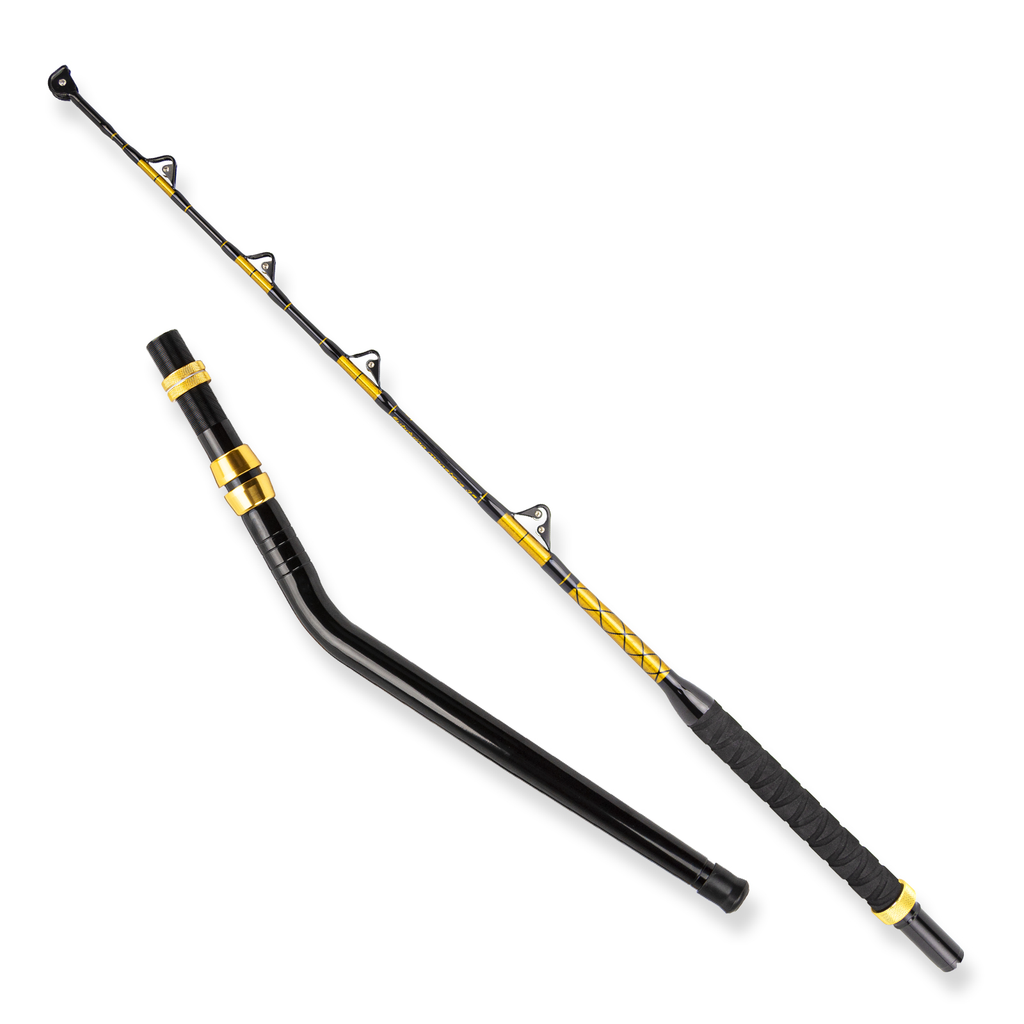
Big game trolling rods are built for species that can produce powerful runs and place significant stress on fishing tackle. Common targets include:
- Tuna: Strong runs and powerful body strength require substantial rod power and lifting ability.
- Marlin: Large marlin demand heavy-duty tackle that can handle prolonged fights and high loads.
- Sailfish: A suitable rod needs enough strength while still providing controlled pressure during fast runs.
- Swordfish: Deep-water fishing and large fish require a durable setup with appropriate line capacity and rod power.
- Shark: Heavy construction helps anglers maintain pressure when targeting strong and persistent predators.
- Large mahi-mahi: Bigger mahi-mahi can provide explosive runs and aerial fights, especially when using offshore trolling gear.
- Other powerful offshore species: Wahoo, large grouper, and other strong saltwater fish may also require a heavy-duty setup.
A deep sea trolling rod is particularly useful when fishing deep water, strong currents, or areas where large fish can make long runs. The ideal rod still depends on fish size, fishing depth, trolling technique, line class, and local conditions.
In short, a big game trolling rod is not simply a heavier version of a standard rod. It is a complete system designed to provide strength, leverage, durability, and control when offshore anglers target powerful fish.
8 Key Features of a Good Trolling Rod for Big Game Fishing
Choosing a good trolling rod for big game fishing requires more than checking the highest pound rating. A rod needs to work as part of a complete tackle system. Rod power, line class, action, length, guides, butt style, construction, and saltwater resistance all affect how the rod performs on the water.
The right combination depends on your target species, fishing technique, reel, line, lure, drag pressure, and offshore conditions. Here are eight important features to consider.
1. Rod Power and Lifting Strength
Rod power describes how much force a rod can handle and how much resistance it provides when it loads under pressure. Trolling rods generally range from light and medium power to heavy and extra-heavy power.
Light and medium-power rods work well for smaller offshore species and lighter tackle. Heavy and extra-heavy trolling rods provide more backbone and lifting power for larger fish. They can help anglers maintain pressure when a tuna, marlin, shark, or other powerful species makes a strong run.
For big game fishing, however, more power does not always mean a better rod. You should match rod power with four main factors:
- Target species: Larger and stronger fish usually require more rod power.
- Line class: The rod should work within the intended line range.
- Drag pressure: Higher drag settings place greater loads on the rod and tackle.
- Fishing environment: Deep water, strong currents, and limited space around the boat can increase the need for lifting power.
A strong rod backbone helps you control a fish and gain line, but the rod also needs enough flexibility to protect the line and absorb sudden runs. The goal is to balance lifting power and fish-fighting performance, rather than simply choosing the heaviest rod available.
2. Correct Line Class
Line class indicates the range of line strength that a rod is designed to handle. It provides an important starting point when matching your rod to the rest of your tackle.
For example, a 100–130 lb trolling rod is designed for much heavier applications than a 30–50 lb model. The appropriate class depends on the size of the fish, fishing method, line type, drag setting, and overall tackle system.
The following ranges provide general examples rather than universal rules:
| Line Class | Typical Use | Target Species |
| 30–50 lb | Medium offshore trolling | Mahi-mahi, smaller tuna |
| 50–80 lb | Heavy offshore trolling | Tuna, large mahi-mahi |
| 80–100 lb | Big game fishing | Large tuna, shark |
| 100–130 lb | Heavy big game | Large tuna, marlin, shark |
These ranges are only general guidelines. Actual rod selection can vary based on fish size, reel specifications, line type, leader strength, drag pressure, lure weight, and fishing conditions.
Most importantly, the rod should match the reel, main line, leader, and drag system. For example, using a very heavy line on a rod that cannot handle the corresponding load can create an unbalanced setup. A well-matched system gives you better control and reduces unnecessary stress on individual components.
3. Rod Action and Flex Pattern
Rod action describes where the blank bends when you apply pressure. The three common categories are fast, moderate, and slow action.
A fast-action rod bends closer to the tip and generally responds quickly. A moderate-action rod bends farther down the blank and provides a more progressive load. A slow-action rod distributes the bend over an even larger portion of the blank.
Action can influence several aspects of trolling performance:
- Hook setting: A faster response can help transfer pressure quickly to the hook.
- Lure presentation: The flex pattern affects how the rod responds to lure movement and trolling pressure.
- Shock absorption: A deeper bend can help absorb sudden surges and head shakes.
- Fish fighting: A progressive load can maintain pressure while reducing sudden stress on the line and terminal tackle.
For many big game applications, a moderate or progressive action can help absorb powerful runs while keeping steady pressure on the fish. However, the ideal action depends on the entire setup. It should complement your reel drag, line strength, leader, lure, and target species.
4. Rod Length
Rod length affects both leverage and line control. There is no single trolling rod length that works best for every big game application.
Shorter rods generally provide stronger leverage and make it easier to put lifting pressure on a powerful fish. This can be particularly useful when fighting large fish close to the boat or when using heavy offshore tackle.
Short trolling rods can offer:
- More direct lifting power
- Better leverage
- Easier handling under heavy loads
- Good control during close-range fish fights
Longer rods can provide greater line control and help spread multiple trolling lures across a wider area. They can also offer advantages in certain boat layouts and trolling patterns.
Longer trolling rods can provide:
- Greater line control
- A wider lure spread
- More separation between trolling lines
- Useful positioning options for certain trolling setups
Your ideal length depends on the boat, rod holder position, trolling technique, lure setup, and fighting method. A short, powerful rod may suit heavy big game tackle, while a longer model may work better when lure spread and line positioning are priorities.

5. Strong and Reliable Guide System
The guide system plays an important role in transferring line pressure through the rod. Big game trolling puts significant stress on guides, especially when anglers use heavy line and high drag pressure.
Roller Guides vs. Conventional Guides
Roller guides use rotating rollers to help reduce friction as the line moves through the guides. This can be useful when fighting large fish that make long runs and pull significant amounts of line from the reel.
Large roller guides can be especially useful on a heavy-duty trolling rod because they are designed to handle substantial line loads. They can also help maintain smooth line movement under heavy pressure.
Conventional guides remain a practical choice for many trolling setups. The best guide system depends on the rod design, line type, fishing technique, and expected load.
Guide Frame and Material
The guide frame also deserves attention. Look for features such as:
- Stainless steel components: Help provide strength and resistance to the marine environment.
- Corrosion resistance: Important for repeated saltwater use.
- Strong guide frames: Help withstand high loads and repeated fish fights.
- Proper guide alignment: Helps maintain smooth line flow and reduces unnecessary stress.
For offshore anglers, saltwater rod guides need to balance strength, smooth line movement, and corrosion resistance.
6. Bent Butt vs. Straight Butt
The butt section affects how you hold and fight a fish. Bent butt and straight butt trolling rods each have their own advantages.
Bent Butt
A bent butt creates a different rod angle relative to the angler and can provide useful leverage during heavy fish fights. It can also help create a lower fighting angle when paired with the appropriate harness, gimbal, or fighting chair.
Common advantages include:
- Improved leverage
- A lower fighting position
- Better suitability for certain heavy offshore setups
- Compatibility with some stand-up and fighting-chair techniques
Bent butt rods are particularly common in heavy big game applications where anglers expect high loads and extended fights.
Straight Butt
A straight butt offers a simpler and more versatile design. It can work well across different trolling setups and may also be easier to transport and handle.
Common advantages include:
- Simple design
- Versatile use
- Easier transport
- Compatibility with a wider range of trolling situations
The choice should match your reel, harness or fighting system, boat setup, rod holder, and personal preference. Neither butt style is automatically better for every angler.
7. Durable Rod Construction
A good big game fishing rod needs a blank and components that can withstand repeated heavy loads. Manufacturers commonly use fiberglass, carbon fiber, or composite materials to achieve different combinations of strength, flexibility, weight, and durability.
Common construction options include:
- Fiberglass: Known for toughness, durability, and a forgiving flex pattern.
- Carbon fiber: Offers a strong strength-to-weight ratio and responsive performance.
- Composite construction: Combines characteristics from different materials.
- Reinforced blanks: Add strength in areas that experience higher loads.
- Strong reel seats: Keep the reel securely connected to the rod during hard fights.
- Durable butt sections: Help the rod withstand pressure from heavy tackle and repeated use.
When comparing construction, consider more than material alone. Look at the strength-to-weight ratio, flex characteristics, impact resistance, long-term durability, and saltwater resistance.
A carbon fiber rod is not automatically the best choice for every application, just as a fiberglass rod is not automatically stronger in every situation. The blank design and overall construction matter just as much as the material itself.
8. Saltwater and Corrosion Resistance
Offshore fishing exposes tackle to saltwater, spray, humidity, and repeated moisture. Without proper protection, these conditions can accelerate corrosion and shorten the life of guides, reel seats, fittings, and other components.
A good saltwater trolling rod should use components designed for marine environments. Useful features can include:
- Corrosion-resistant guides
- Stainless steel components
- Durable protective finishes
- Sealed or protected components where appropriate
- Materials suitable for repeated saltwater exposure
However, corrosion resistance does not come from materials alone. Even a well-built offshore fishing rod needs proper care. Rinse the rod with fresh water after saltwater trips, allow it to dry completely, and inspect the guides, reel seat, and other metal components regularly.
For this reason, durability should be viewed as a combination of rod construction, component quality, corrosion resistance, and maintenance. A well-maintained rod can remain reliable for many fishing trips, even when you regularly fish demanding offshore environments.

How to Match a Trolling Rod to Your Target Species
The right trolling rod for big game fishing depends heavily on the species you plan to target. Different fish have different levels of strength, fighting behavior, and habitat. A rod that works well for mahi-mahi may not provide enough power for a large tuna or marlin.
Instead of choosing a rod based only on its maximum line rating, consider the target species, expected fish size, fishing technique, and overall tackle setup. The following table provides a useful starting point.
| Target Species | Suggested Rod Characteristics |
| Tuna | Heavy power, strong backbone, and a line class matched to the expected fish size and drag setting |
| Marlin | Heavy to extra-heavy power, strong guides, and high-load construction for prolonged fights |
| Sailfish | Medium-heavy to heavy power, depending on fish size, line class, and fishing setup |
| Shark | Heavy-duty construction, strong lifting power, and components designed for sustained pressure |
| Mahi-Mahi | Medium to heavy power, depending on target size and trolling conditions |
| Swordfish | Heavy-duty construction matched to deep-water tackle, line capacity, and fishing technique |
Trolling Rod for Tuna
Tuna are powerful swimmers that can make long, fast runs. A trolling rod for tuna should provide enough backbone to maintain pressure while still working well with the selected line and reel. Heavy power is often appropriate for larger tuna, while smaller tuna may require a lighter setup.
Line class should match the expected fish size and drag pressure. A balanced setup also helps prevent the rod from becoming unnecessarily heavy or stiff.
Trolling Rod for Marlin
Marlin can place substantial loads on offshore tackle during long fights. A trolling rod for marlin typically needs heavy or extra-heavy power, strong guides, and a durable blank that can handle repeated pressure.
The ideal setup also depends on the size of the marlin and whether you fish from a fighting chair, stand-up position, or another boat setup. A strong rod alone cannot compensate for an improperly matched reel, line, leader, or drag system.
Trolling Rod for Sailfish
Sailfish are known for fast runs and dramatic changes in direction. A trolling rod for sailfish should provide enough strength for the target fish while maintaining suitable flexibility.
Medium-heavy to heavy power can work depending on the fish size and overall tackle. The goal is to maintain steady pressure without using unnecessarily heavy gear.
Trolling Rod for Shark
Sharks can provide sustained resistance and powerful runs. A trolling rod for shark fishing should have a strong backbone and enough lifting power to control the fish as it approaches the boat.
Heavy-duty construction becomes particularly important when you combine heavy line, strong leaders, and higher drag pressure. The rod should work as part of a complete system rather than carry the entire load by itself.
Trolling Rod for Mahi-Mahi
Mahi-mahi can be aggressive fighters, but they generally do not require the same level of heavy tackle used for the largest tuna, marlin, or sharks. A trolling rod for mahi-mahi can range from medium to heavy power depending on the expected fish size and fishing conditions.
A moderately powered setup may offer better versatility and allow anglers to enjoy the fight without using excessive tackle.
Trolling Rod for Swordfish
Swordfish often require specialized deep-water tackle. A trolling rod for swordfish needs enough power for large fish while working with the line capacity, reel, leader, and terminal tackle required for deep-water fishing.
Depth and current can significantly affect the load on the entire system. For this reason, anglers should consider the complete setup rather than selecting a rod based only on its pound rating.
Other Factors That Can Change Your Rod Choice
Species provides an important starting point, but it does not determine the ideal rod by itself. Fish size, fishing technique, water depth, current strength, lure or bait, and drag setting can all change the amount of pressure placed on the rod.
For example, two anglers targeting the same species may need different rods because they use different line classes, trolling methods, lure weights, or drag settings. Deep water and strong currents can also increase resistance and place additional load on the tackle.
The best approach is to match the rod, reel, main line, leader, lure or bait, and drag system as one balanced setup. This gives you enough power for the target fish without choosing a rod that is unnecessarily heavy or difficult to handle.
How Trolling Rod, Reel, Line, and Lure Work as a System
Choosing a trolling rod based on one specification alone can lead to an unbalanced setup. A high line rating does not automatically make a rod suitable for every big game application. Rod power, reel drag, line strength, leader, and lure weight all work together during a fish fight.
A better approach is to build a complete fishing tackle system. When each component matches the others, the setup can provide better control, smoother performance, and more consistent pressure on the fish. This becomes especially important when targeting tuna, marlin, shark, swordfish, and other powerful offshore species.
Rod + Reel Compatibility
The reel is one of the most important components to match with a trolling rod. A powerful rod needs a reel that can handle the same level of load and provide suitable line capacity.
A conventional trolling reel is a common choice for offshore trolling because it offers a strong drag system, good line capacity, and direct control over the line. For heavier big game applications, a two-speed reel can provide additional flexibility. The high gear can help with faster line recovery, while the low gear provides more torque when fighting a powerful fish close to the boat.
Pay close attention to the reel’s drag range. The reel should provide enough usable drag for your selected line without forcing the rod beyond its intended load. Smooth drag performance also helps protect the line when a fish makes sudden runs.
The reel seat must also securely fit the reel. A strong reel seat helps transfer pressure between the reel and blank and reduces unwanted movement during a heavy fight.
When matching a rod and reel, consider:
- Rod power and line rating
- Reel size and line capacity
- Maximum and usable drag range
- Gear ratio and retrieve speed
- Conventional or two-speed reel design
- Reel foot and reel seat compatibility
The goal is not to pair the strongest rod with the strongest reel. Instead, choose components that can work together under the expected fishing load.
Rod + Line + Leader
Your main line and leader should also match the rod’s specifications. The line class gives you a useful starting point, but the actual setup depends on the target species, line material, drag setting, and fishing technique.
For example, braided line provides high strength for its diameter and can offer excellent line capacity. It also has relatively low stretch, which can improve sensitivity and direct pressure. Monofilament line has more stretch, which can help absorb sudden movements and provide some shock absorption during a fight.
Neither line type is automatically better for every trolling application. The choice should fit your rod, reel, fishing method, and target species.
The leader also plays an important role. Its strength should complement the main line and the fish you target. Anglers should consider:
- Main line strength
- Rod line rating
- Leader strength
- Leader material
- Knot strength
- Drag setting
- Target fish and expected fighting behavior
Strong tackle does not eliminate the need for good connections. A poorly tied knot or unsuitable leader can become the weakest point in an otherwise powerful setup.
Rod + Lure or Bait
The lure or bait also affects how a trolling rod performs. Heavy lures create more resistance as they move through the water, especially at higher trolling speeds. This resistance continuously loads the rod during the presentation.
Always check the rod’s recommended lure weight or application range when the manufacturer provides one. A lure that is too heavy can place excessive stress on the blank, while a lure that is too light may not load the rod effectively.
Trolling speed also matters. A large diving lure or high-resistance lure can create significantly more pressure than a small surface lure. Strong currents can increase this load even further.
When selecting a rod for a particular lure or bait, consider:
- Lure or bait weight
- Lure resistance
- Trolling speed
- Water depth
- Current strength
- Rod power and action
- Hook and terminal tackle
Heavy lures require suitable rod power and construction, especially when you troll at higher speeds or fish in strong currents. The rod needs enough strength to handle the continuous load while still providing the flexibility required during a fish fight.
Build a Balanced Offshore Setup
A good balanced offshore setup starts with compatibility between every major component. Instead of asking which trolling rod has the highest strength rating, consider how the rod works with the reel, line, leader, and lure.
A practical matching process looks like this:
Target species → rod power → line class → reel and drag → leader → lure or bait → fishing conditions
This approach helps prevent an oversized or undersized setup. It also supports better fish-fighting control and can reduce unnecessary stress on individual components.
For big game fishing, the best tackle system is not necessarily the heaviest one. It is the system in which the rod, reel, line, leader, and lure work together for the target species and fishing conditions.
Common Mistakes When Choosing a Big Game Trolling Rod
Choosing a big game trolling rod involves more than comparing power ratings and product specifications. A rod can have excellent strength but still perform poorly if it does not match your line, reel, lure, or fishing technique. Avoiding common mistakes can help you build a more balanced and efficient offshore setup.
Choosing the Strongest Rod Available
One of the most common mistakes is assuming that the strongest rod is always the best choice. A heavier heavy-duty trolling rod can provide more lifting power, but extra power can also reduce versatility and make the setup harder to handle.
For example, a 100–130 lb rod may be ideal for large tuna, marlin, or shark, but it may be excessive for smaller tuna or mahi-mahi. An overly heavy rod can also make lure presentation less responsive and increase fatigue during long trolling sessions.
Instead of choosing the highest line rating available, match rod power to the target species, fish size, line class, reel drag, and fishing conditions. The goal is enough power to control the fish without using more rod than the situation requires.
Ignoring Line Class
The rod and main line need to work together. Every trolling rod has a recommended line range, and this rating provides an important starting point when building your tackle system.
Using a line that does not match the rod can create an unbalanced setup. A line that is too light may limit the rod’s ability to handle the intended fish. A much heavier line may place excessive load on the blank, guides, reel, or other components when you apply high drag pressure.
Before buying an offshore trolling rod, check the recommended line class and compare it with your reel capacity, leader strength, and target species. Also consider your actual drag setting rather than looking at line strength alone.
Focusing Only on Rod Weight
A lightweight trolling rod may feel easier to handle, but lower weight does not automatically mean better performance. Big game fishing places high demands on the blank, guides, reel seat, and butt section.
A good saltwater trolling rod should provide an appropriate balance of strength, weight, action, durability, and leverage. A slightly heavier rod may offer better structural support and lifting power for demanding offshore applications.
Consider how the rod feels with the reel attached. A well-balanced setup can reduce unnecessary fatigue and improve control during a long fight. Instead of choosing the lightest rod, look for a design that provides the right strength-to-weight balance for your fishing style.
Choosing the Wrong Guide System
The guide system plays an important role when a trolling rod handles heavy line and high drag pressure. Choosing guides simply because they look strong can lead to an unsuitable setup.
Roller guides can work well for heavy-duty trolling because they reduce line friction as the line passes through the guides under heavy loads. They are particularly useful for certain big game applications involving heavy line and powerful fish. Conventional guides can also perform well and may suit different line types, techniques, and tackle configurations.
When choosing a guide system, consider:
- Main line type
- Line class
- Drag pressure
- Target species
- Trolling technique
- Lure or bait setup
- Expected load on the rod
A roller guide trolling rod is not automatically better for every situation. The guide system should match the rest of the tackle and the way you fish.
Ignoring the Reel and Fighting Setup
A trolling rod does not work independently. The reel, harness, fighting chair, and overall fighting position can all affect how much pressure the angler places on the rod.
A bent butt trolling rod can provide useful leverage and a lower fighting angle when paired with a suitable harness, gimbal, or fighting chair. This design often fits heavy offshore setups where anglers need strong leverage against powerful fish.
A straight butt trolling rod offers a different handling experience and can work well for versatile trolling setups. It may also be more convenient when the boat and fighting technique do not require the leverage of a bent butt.
Before choosing between bent and straight butt designs, consider:
| Fighting Setup | Rod Consideration |
| Harness and stand-up fishing | Match butt style to fighting position and leverage needs |
| Fighting chair | Bent butt can provide useful leverage in some heavy setups |
| Gimbal setup | Check butt and gimbal compatibility |
| Straight-butt setup | Versatile option for different trolling applications |
| Heavy big game fishing | Match rod, reel, drag, harness, and fighting system |
The right rod should fit the way you actually fight fish. A powerful rod may perform differently depending on your fighting position, reel configuration, and boat setup.
Overall, the biggest mistake is choosing a big game trolling rod based on one specification alone. Rod power, line class, weight, guides, butt style, reel, and fighting system all need to work together. A balanced setup usually provides better control, efficiency, and confidence than simply choosing the heaviest tackle available.
What Specifications Should You Check Before Buying?
Before buying a big game trolling rod, check more than the rod’s power or line rating. A good rod should match your target species, fish size, reel, line, lure, and fishing technique. Use the following checklist to compare different offshore trolling rods and find a balanced setup.
Big Game Trolling Rod Buying Checklist
- Target species: Choose a rod designed for the species you plan to target, such as tuna, marlin, sailfish, shark, or mahi-mahi.
- Target fish size: Consider the average and maximum fish size. Larger fish usually require more lifting power and a stronger overall setup.
- Line class: Match the rod’s recommended line range with your main line, leader, reel capacity, and intended drag pressure.
- Rod power: Choose light, medium, heavy, or extra-heavy power based on fish size, line class, and fishing conditions.
- Rod action: Consider how quickly the blank loads and recovers. Action affects lure control, hook setting, and shock absorption during a fight.
- Rod length: Shorter rods can provide strong leverage, while longer rods can improve line control and lure-spread management.
- Lure weight: Check the recommended lure weight or application range. Heavy lures and high-resistance trolling setups require suitable rod power.
- Guide type: Choose roller or conventional guides based on line type, load, drag pressure, and trolling technique.
- Guide material: Look for strong, corrosion-resistant materials that can handle repeated exposure to saltwater.
- Butt style: Select a bent butt or straight butt based on your reel, harness, gimbal, fighting chair, and preferred fighting position.
- Blank material: Compare fiberglass, carbon fiber, and composite construction based on strength, flexibility, weight, durability, and application.
- Reel seat: Make sure the reel seat securely fits your trolling reel and can handle the expected load.
- Handle material: Check grip comfort, durability, and resistance to saltwater, moisture, and repeated use.
- Corrosion resistance: Look for corrosion-resistant guides, fittings, reel seats, and finishes when fishing in saltwater.
- Overall weight and balance: Consider how the rod balances with the reel. A well-balanced setup can improve comfort and control during long fights.
How to Use This Checklist
Do not evaluate these specifications separately. Start with the target species and fish size, then determine the appropriate line class and rod power. Next, match the action, length, lure weight, guides, and butt style to your fishing technique.
Finally, check compatibility with your reel, line, leader, and fighting system. This approach helps you avoid choosing a rod simply because it has the highest power rating or the lowest weight.
For most anglers, the best trolling rod for big game fishing is the one that provides the right combination of strength, control, durability, and balance for the specific fishing situation.
Big Game Trolling Rod Buying Checklist
Choosing a big game trolling rod becomes easier when you follow a simple decision process. Instead of comparing every specification at once, start with the fish you want to catch and work through your tackle setup step by step.
Step 1: Identify Your Target Species
Start with the species you plan to target. Tuna, marlin, shark, sailfish, and mahi-mahi can require different levels of rod power and lifting strength.
Also consider the typical fish size in your fishing area. A rod for smaller tuna may not provide enough power for large bluefin tuna or marlin.
Step 2: Determine the Required Line Class
Choose your line class based on the target fish, expected drag pressure, fishing technique, and reel capacity. The rod’s line rating should work with your main line and leader.
Common big game trolling setups may use 50–80 lb, 80–100 lb, or 100–130 lb line classes. These ranges are general guidelines, so always check the rod and reel specifications for your specific setup.
Step 3: Select Appropriate Rod Power and Action
Once you know the line class, choose the appropriate rod power and action.
Heavy or extra-heavy power can provide the lifting strength needed for large fish. Rod action affects how the blank loads, how the rod absorbs sudden runs, and how it transfers pressure to the fish.
Do not automatically choose the strongest or fastest rod. Match power and action to the species, line, lure, reel drag, and fishing technique.
Step 4: Choose Length, Guides, and Butt Style
Next, consider the physical design of the rod.
- Length: Shorter rods can provide leverage and lifting power, while longer rods can improve line control and lure-spread management.
- Guides: Choose roller or conventional guides based on your line, load, drag pressure, and trolling technique.
- Butt style: Choose between a bent butt and straight butt based on your reel, harness, gimbal, fighting chair, and preferred fighting position.
These features affect how the rod feels and performs during an extended fight.
Step 5: Confirm Compatibility With Reel, Line, Leader, and Lure
Before buying, make sure the rod works as part of your complete fishing system. Check the following:
| Component | What to Check |
| Reel | Size, line capacity, drag, reel foot, and reel seat compatibility |
| Main line | Line class, material, and expected load |
| Leader | Strength, material, and connection strength |
| Lure | Weight, resistance, trolling speed, and depth |
| Fighting setup | Harness, gimbal, fighting chair, or stand-up configuration |
The goal is not to build the heaviest possible setup. A good trolling rod for big game fishing should work smoothly with the rest of your tackle.
By following these five steps—species → line class → power and action → length and hardware → complete tackle compatibility—you can narrow down your options and choose a rod that fits your actual offshore fishing needs.
FAQ About Big Game Trolling Rods
What makes a good trolling rod for big game fishing?
A good trolling rod for big game fishing should provide the right combination of power, line rating, action, length, and durability. It should also have reliable guides, a secure reel seat, and a suitable butt style. Most importantly, the rod should match the target species, reel, line, leader, lure, and fishing technique.
What pound trolling rod is best for tuna?
There is no single line class that works for every tuna fishery. Smaller tuna may suit a 30–50 lb or 50–80 lb trolling rod, while larger tuna can require 80–100 lb or 100–130 lb tackle.
Your fishing technique also matters. Consider trolling depth, lure size, drag pressure, current, and the expected size of the fish. A heavy rod may provide more control for large tuna, but it can be unnecessary for smaller fish.
The best approach is to match the trolling rod line class to the tuna size and the rest of your tackle system.
What size trolling rod is best for marlin?
A marlin trolling rod needs enough power and lifting strength to handle a large, powerful fish. Heavy or extra-heavy power is common for demanding marlin applications, while the appropriate line class depends on fish size, tackle configuration, and fishing conditions.
Rod length also affects performance. A shorter rod can provide strong leverage during a fight, while a longer rod can offer more line control. You should also consider a bent butt trolling rod if your boat uses a fighting chair or a heavy stand-up setup.
Are roller guides better for big game trolling?
Roller guides can be an excellent choice for big game trolling, especially when anglers use heavy line and high drag pressure. The rollers help reduce friction as the line moves through the guides under heavy loads.
However, roller guides are not automatically better for every setup. They add weight and require proper maintenance, especially in saltwater. Conventional guides can also work well when they match the line, load, reel, and fishing technique.
Choose the guide system based on your complete tackle setup rather than guide type alone.
Is a bent butt trolling rod better than a straight butt?
Neither design is universally better. A bent butt trolling rod can provide useful leverage and a lower fighting angle, making it suitable for fighting chairs, harness systems, and some heavy offshore setups.
A straight butt offers a more traditional and versatile configuration. It can work well for different trolling situations and may suit anglers who prefer a simpler fighting setup.
Your boat layout, reel, harness, gimbal, fighting chair, and preferred fighting position should determine the better choice.
What rod power is best for offshore trolling?
The best rod power depends on the target species, fish size, line class, reel drag, lure, and fishing conditions. Medium-heavy power may suit smaller offshore species, while heavy or extra-heavy rods can handle larger tuna, marlin, shark, and other powerful fish.
Do not choose rod power based only on the highest available rating. Match the rod’s power to the line class and the amount of pressure you expect to apply during the fight.
How long should a big game trolling rod be?
The ideal length depends on how you fish. Shorter big game trolling rods generally provide more leverage and can make it easier to apply lifting pressure on powerful fish. They can work well for heavy offshore applications.
Longer rods can improve line control and help manage a wider lure spread. However, they may provide less direct leverage in some heavy fighting situations.
Choose rod length based on your target species, boat setup, trolling technique, lure spread, and preferred fighting position.
Can one trolling rod handle different big game species?
Yes, a versatile trolling rod can handle several species when their tackle requirements overlap. For example, a well-matched heavy trolling rod may work for different sizes of tuna, mahi-mahi, and other offshore species.
However, one rod cannot cover every big game application equally well. A rod designed for large marlin or heavy shark fishing may be excessive for smaller tuna or mahi-mahi.
For versatility, choose a rod with a practical line range, balanced power, and a suitable action. Then match the reel, line, leader, and lure to each fishing situation.